


King Amarone and Crown Prince Ripasso

Azienda Agricola Manara was founded in San Floriano in 1950 and has been rooted in the Valpolicella region for four generations. With passion and experience, it continues the long tradition of winemaking.
The Manara winery has been producing Amarone since 1950, along with all the other typical Valpolicella wines such as Valpolicella DOC Classico, Valpolicella Ripasso DOC Classico and Recioto della Valpolicella DOCG Classico.
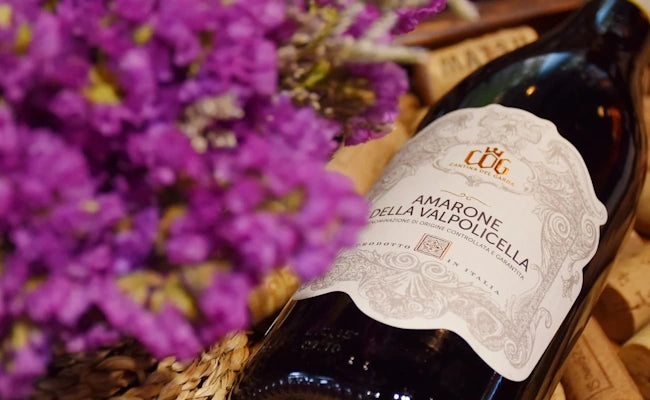
Amarone della Valpolicella is a deep red wine that tends towards garnet with age. Its aroma is reminiscent of dried fruit, tobacco, and spices. The taste is intensely dry yet very smooth, with a full body. Considered the most important of the Veronese and Italian red wines, Amarone originated from the Recioto vineyard.
Video: Winemaker Davide Manara introduces himself and his winery
A wine whose unique accent, the strong character of the old, yet modern and contemporary wine, has been appreciated by the most discerning connoisseurs from around the world, conveying the grandeur, charm and authentic magic of Valpolicella.
In the fourth century AD, Cassiodorus, minister of Theodoric, king of the Visigoths, describes in a letter a wine that was obtained using a special grape drying technique, then called "Acinatico" and produced in the area around Valpolicella.
Acinatico is undoubtedly the ancestor of Recioto and Amarone. At that time in Valpolicella, only Recioto was produced, a velvety and sweet wine. Over time, and with the changing climate between seasons, the grapes, although processed in the same way as before, yielded a remarkably dry wine after fermentation compared to the original. This is how Amarone came about, its name referring to its characteristic bitter aroma. The first bottles were produced only in the early 20th century for family and friends. However, actual marketing began only after the war, and in 1968 it received the Denomination of Controlled Origin (DOC) status.
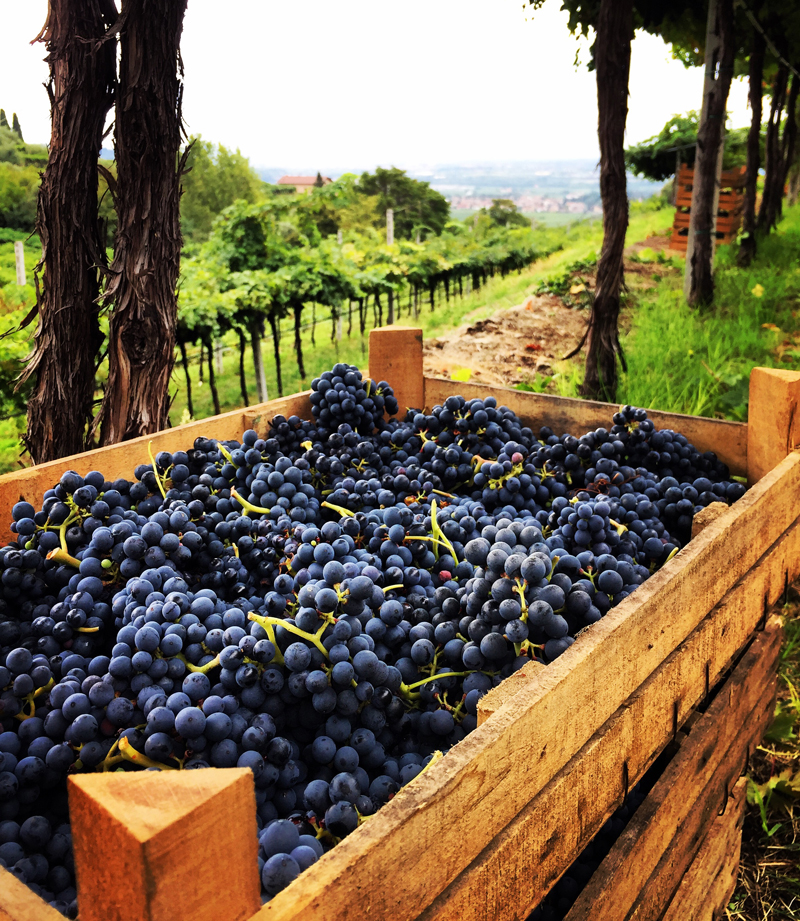
Image: Grapes after harvest at the Manara winery vineyard
During the harvest, special care is taken to ensure that the grapes are perfectly healthy and have reached full ripeness so that they can successfully withstand the delicate drying phase. Current production regulations stipulate the following grape composition: Corvina (min. 45% - 95%) and Corvinone (max. 50%), but only if it replaces the Corvina grape in the same percentage. The Rondinella grape may be added at a rate of 5 to 30%. Additionally, "non-aromatic red grape varieties" (max. 15%) may be used, as permitted and recommended by the DOC regulations for the province of Verona.
The grapes are carefully selected in the vineyard and, after harvesting, are laid out with the utmost care in single layers in wooden or plastic crates or on bamboo poles to allow for better air circulation and prevent the grapes from being crushed. They are then moved to large, well-ventilated fruit storage rooms above the cellars. This ensures ideal preservation of the grapes.
The grapes remain in the fruit chambers for three to four months and are constantly monitored to immediately remove any berries affected by rot and harmful molds, until they lose at least half their weight and the evaporation of water reaches the desired sugar concentration of 25-30%.
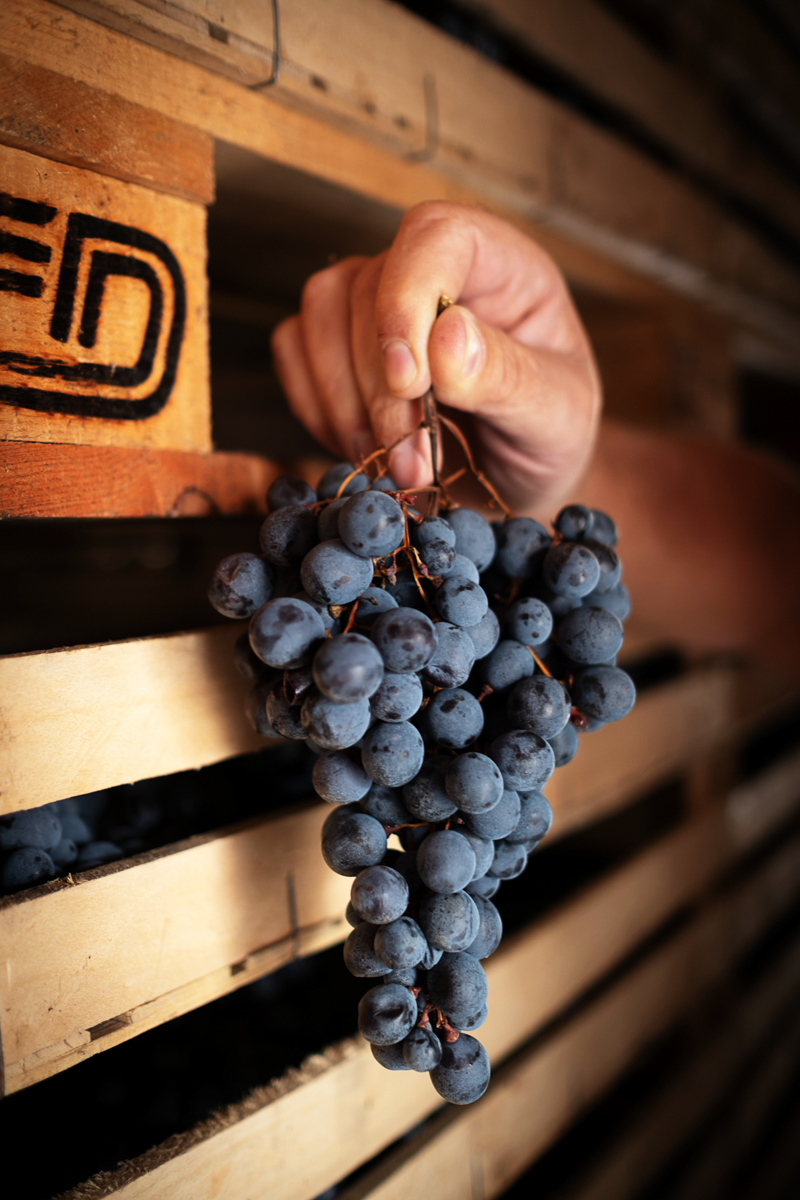
Image: Drying grapes at the Manara winery
During this specific phase, a series of complex transformations take place in the grapes; the acidity decreases, while the concentration of polyphenols, and especially glycerol and other substances, increases considerably. These transformations make the wine appear different compared to wines made from ordinary fresh grapes.
After drying, the grapes undergo another careful inspection before being pressed. Processing the dried grapes allows for the production of a wine that subsequently requires quite long aging periods in barrels and bottles.
This complex process gives the produced wines great emotions and inimitable qualities, an original taste, a direct expression of a unique territory, even after aging for several years.
The natural complement to both methods is the aging of the wines in wooden containers; large barrels made of Slavonian oak up to small barrels made of French oak of 225-300 liters, the latter favoring a faster maturation of the wines.
The Manara family produces two different Amarone wines , distinguished primarily by their different aging processes in the cellar. The Amarone della Valpolicella DOCG Classico " Corte Manara " has been produced since the company's founding in the 1950s. The grapes are selected during the harvest from various vineyards owned by the family (Corvina 70%, Rondinella 20%, other grape varieties 10%).
Gentle pressing, maceration of the must, and slow fermentation in stainless steel tanks for 40-60 days. Maturation begins in large (23 hl) Slavonian oak barrels for approximately 24 months and continues in stainless steel tanks. Bottle aging varies between 6 and 12 months.
Amarone della Valpolicella DOCG Classico " Postera " has been produced by Manara since 1995 in smaller quantities and not in every vintage. The grapes are selected during harvest from a single vineyard (70% Corvina, 20% Rondinella, 10% Croatina, 10% Oseleta).
Gentle pressing, maceration of the must, and slow fermentation in stainless steel tanks for 40-60 days. The subsequent aging in French oak barriques and tonneaux lasts approximately 18 months, followed by aging in stainless steel tanks. Bottle aging varies between 6 and 12 months.
The production of Ripasso, the little brother of Amarone
Valpolicella Ripasso DOC is produced by macerating regular Valpolicella wine with the remaining pomace from Amarone for 15 to 20 days. It is characterized by a more structured and longer-lasting wine than regular Valpolicella, as well as a higher alcohol content, lower acidity, greater roundness, and higher extract and phenolic content.
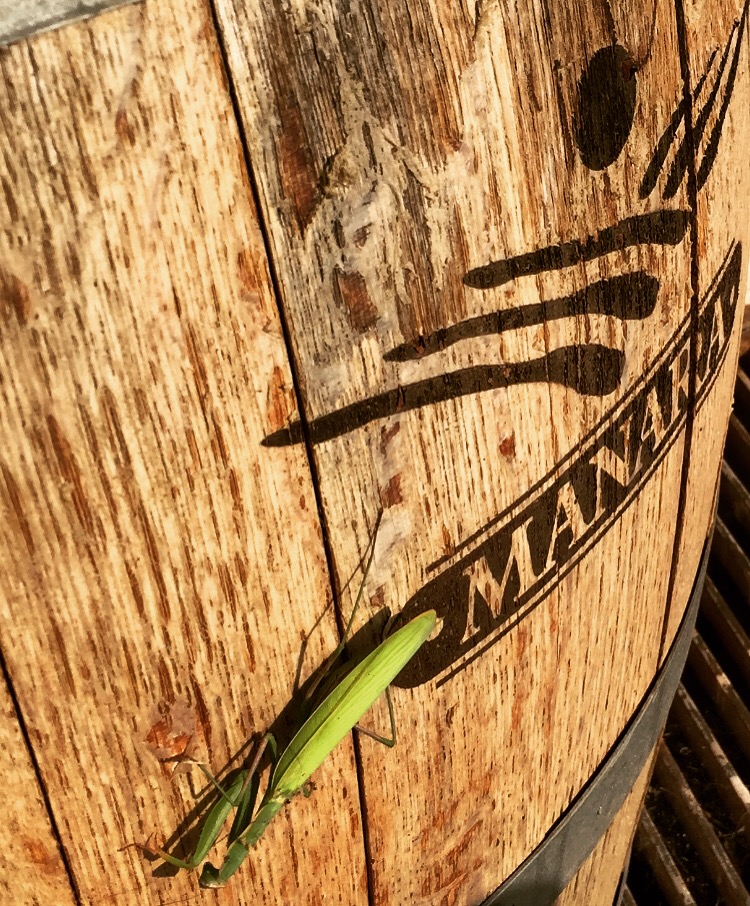
Image: Wine barrel with the logo of the Manara winery in St. Floriano on Lake Garda
The winemakers of Valpolicella have always identified with the term "Ripasso", a precise winemaking technique for "Valpolicella" that has a long tradition and no comparable application in other regions.
The only term that can in any way recall "Ripasso" is the technique called "Government": a technique that was mainly used in Tuscany in the past and consists of re-fermenting wine with dried grapes and therefore not with fermented pomace as in the case of Ripasso.
Ripasso strongly evokes a story of "peasant common sense," of efficiency versus waste. What a contemporary theme! Indeed, the story of Ripasso was born from the same logic of "nothing is thrown away." There's a lot of truth in popular sayings here.
Ripasso was born out of the desire not to "waste" what the pomace of Recioto had absorbed after the wine had been drawn off: complex aromas, alcohol, sugar and tannins, a fruit so precious that it was a real shame to throw it away.
Thus, Valpolicella, a red wine vinified in September, which in the past was often light and fresh, was "returned" to this pomace.
Since Valpolicella Ripasso became a controlled designation of origin (DOC) in April 2010, Valpolicella wine is macerated with fermented pomace from dried grapes that were previously used for the production of Recioto or Amarone.
In practice, after the must wine has been drawn off, and after the pomace in the fermentation tank has been drained more or less thoroughly, Valpolicella wine made from fresh grapes is added to the same container in which the still partially fermented pomace is located.
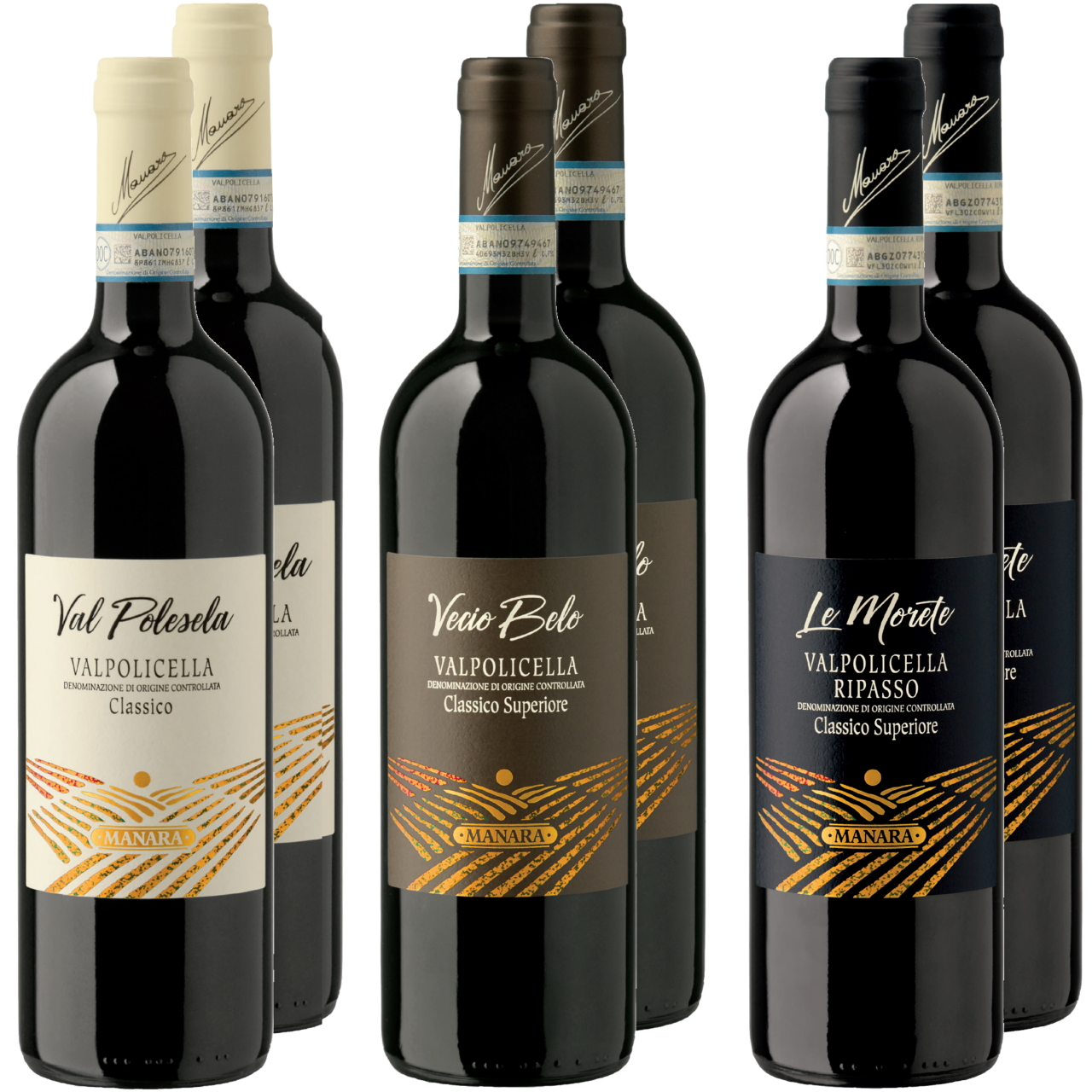
Image: Tasting package of Manara wines Classico, Classico Superiore and Ripasso
From a qualitative point of view, the results depend on the type of wine used for the Valpolicella Ripasso, the ratio of its quality to that of the pomace, the amount of liquid still present in the fermented pomace, and the contact time.
For this reason, we try to reduce contact in order to achieve easy washing out of the liquid soaked in the pomace.
The Manara family produces a Valpolicella Ripasso DOC Classico Superiore "Le Morete" from 70% Corvina grapes, 20% Rondinella grapes, and 10% other grape varieties. The grapes are gently pressed immediately after harvesting and then fermented in stainless steel tanks. The resulting simple Valpolicella wine is then added to the pomace for a second fermentation after the Amarone wine has been bottled. This traditional technique is called "Ripasso." The wine is then aged for approximately 12 months in 20-hectoliter Slavonian and French oak barrels, followed by about 6 months of bottle aging.
Winemaker Davide Manara from the Manara winery
Young winemaker Davide Manara, 28 years old, has taken over his family's winemaking tradition, now in its fourth generation. The Manara winery has been located in San Floriano, between Lake Garda and Verona, since 1950. For three generations, and with the gradual arrival of the fourth, the Manara family has continued their winemaking tradition with passion and experience, remaining strongly and faithfully connected to the region.
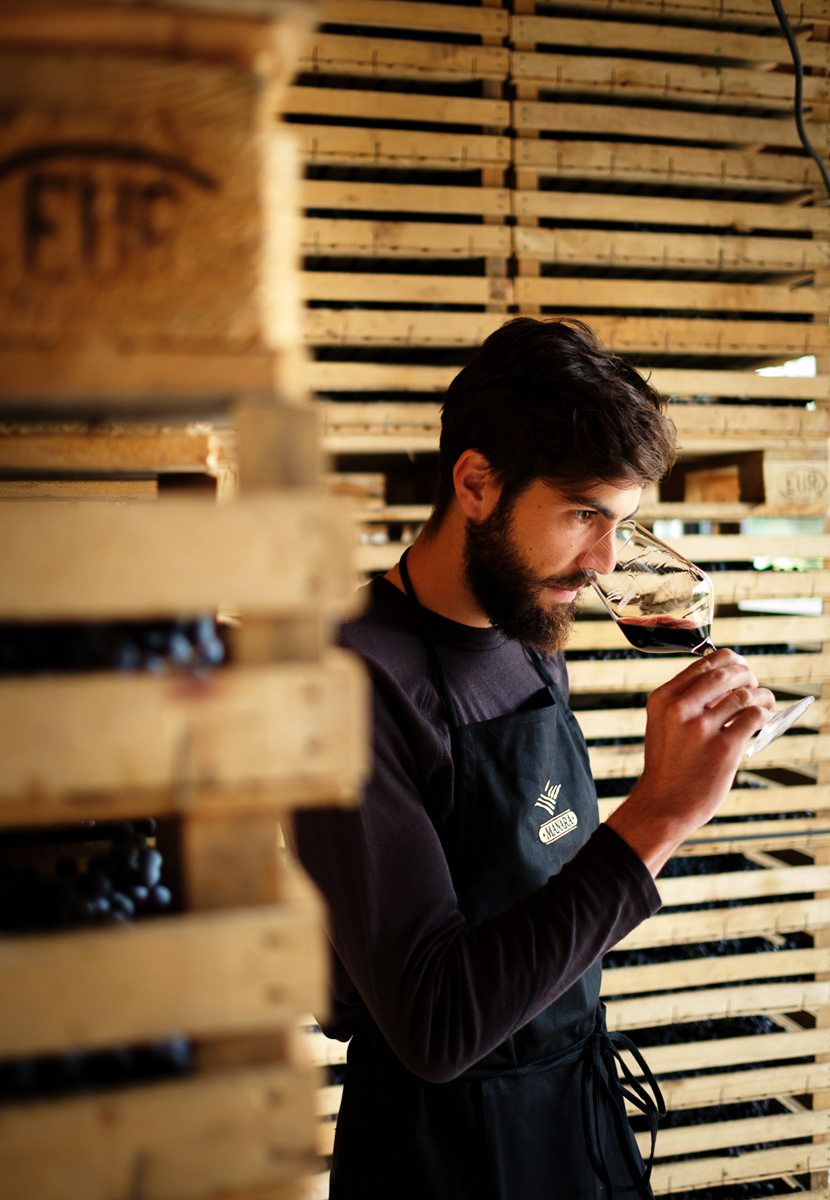
Image: Davide Manara tasting his wine at the winery
All production steps are carried out entirely by the Manara family, who therefore have great confidence in their wines. Customers are always welcome to visit the company and the vineyards directly to experience and appreciate the passion and authenticity that accompany the entire process.
The pursuit of innovation cannot be separated from respect for tradition. Only in this way can the recognition of the wines be maintained without neglecting the constant search for the most modern and effective production techniques.
"We must respect the characteristics of the terroir in order to produce recognizable wines."

Written by Wolfgang Angeli

Leave a comment
This site is protected by hCaptcha and the hCaptcha Privacy Policy and Terms of Service apply.