



Wine country Italy explained

How do I explain the world of Italian wine to an acquaintance in three minutes? That was precisely the question I found myself asking last weekend. Franz, my neighbor from the second floor, rang my doorbell. "Andrea, you have to help me. I'm having guests this weekend and I'm cooking Italian food. We're having pasta with seafood followed by ossobuco. I'm on my way to the supermarket on the corner to buy some wine. Could you recommend two wines that would go well with it and tell me a little bit about Italian wines in general? I'd like to impress my guests with the story behind the wines," he added with a smile, "and you have exactly three minutes, then I have to go."
Typical, I think to myself, trying to impress with his wine knowledge but not taking the time for proper advice and information, but I still try to help him. "You know that's practically impossible. During my training at my sommelier school in Munich, we dedicated several evenings to the topic of Italy. Winegrowing takes place all over Italy, with 21 wine regions in 20 political districts. That alone shows you the importance of wine in Italy. The Greeks brought vines to southern Italy, the Etruscans cultivated wine in many regions across what is now Italy, and the Romans finally brought the knowledge of winemaking across the Alps."
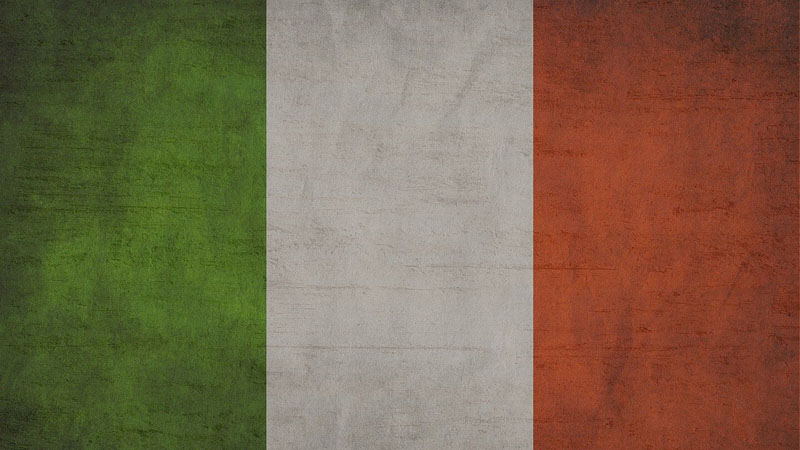
Image 1: The Italian national flag
Even today, Italy still boasts 964 different indigenous grape varieties – grape varieties found only here. But the diversity in Italy isn't limited to grapes. Regions like Veneto, Trentino, South Tyrol, Lombardy, Piedmont, and the Aosta Valley are heavily influenced by the Alpine climate. Inland, you have numerous wine regions such as Umbria, large parts of Tuscany, and Emilia-Romagna. Of course, many regions, like Marche, Abruzzo, and Apulia, are located on the coast, and we mustn't forget the islands, each with its own unique climate. Sicily deserves special mention; Sicilian wines are currently experiencing a surge in popularity.
When buying wine, you can get a rough idea of its quality by looking at its classification. The highest quality level in Italy is DOCG wines. DOCG stands for Denominazione di Origine Controllata e Garantita, meaning a controlled and guaranteed designation of origin. Currently, there are 74 wines in Italy with this high-quality seal. These are followed by DOC wines (Denominazione di Origine Controllata). These are 334 wines with a controlled designation of origin, and the third classification is IGT (Indicazione Geografica Tipica). This is essentially equivalent to German Landwein or French Vin de Pays. However, many high-quality wines, such as Super Tuscans, are sold as IGTs in Italy, as they cannot be classified as DOCs or DOCGs due to the grape varieties used.
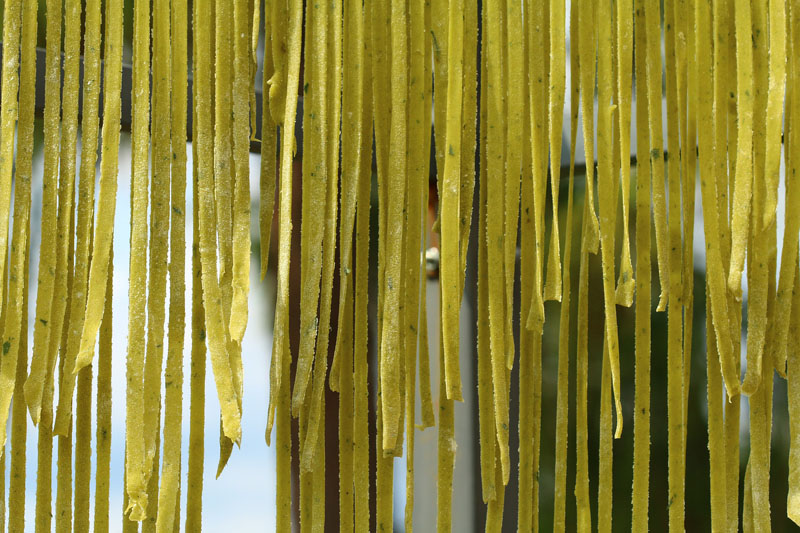
Image 2: Fresh pasta hanging on the clothesline
I think if you keep these key points in mind, you'll already have a solid foundation to build on. So, let's talk about the wines you want to treat your guests to. Generally, it's difficult to recommend a suitable wine without having tasted it yourself or being familiar with it. Therefore, I can only offer a few pointers. I would generally recommend going to a specialist wine shop rather than a supermarket . Ask for advice or check out the website of a good online wine retailer. If you specify the dish you're serving, you'll usually get excellent wine recommendations.
As a general rule, you should always buy wine from the region where the dish originates. Therefore, for example, I would pair the pasta with seafood with a Pecorino DOCG from the Marche region or a Pecorino DOC from Abruzzo. A white Etna DOC would also be a very good match. Ossobuco originally comes from Milan, the capital of Lombardy. Nevertheless, my wine recommendation here would go to neighboring Piedmont and suggest a Barbera d'Alba. Of course, a Chianti Classico DOCG would also be a great choice.
But as I said, you put so much effort into the food. Take the time to research suitable wines at reputable brick-and-mortar and online retailers. Or you could come to my wine and sommelier school, European Wine Education, in Munich.
About the author Andrea Vestri
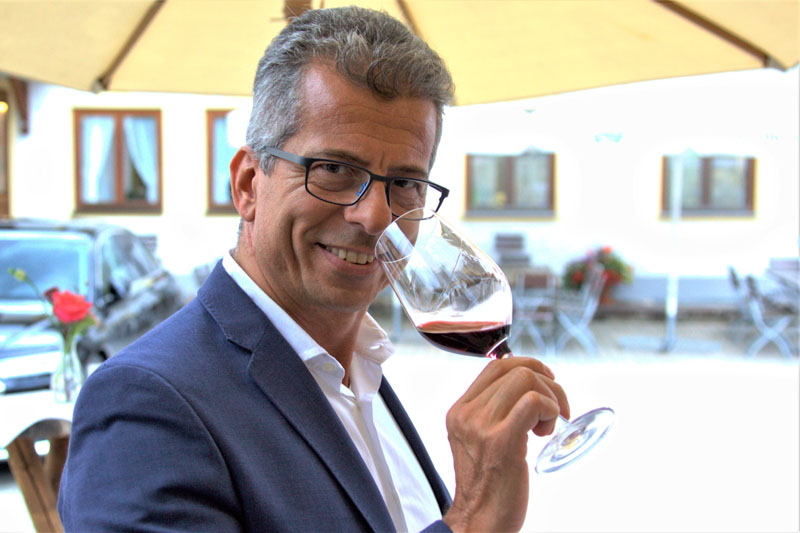
Image 3: Andrea Vestri is an author, sommelier and tour guide
Andrea was born in Florence, Italy, in 1968. From an early age, he had a strong desire to explore new things. At 22, he moved to Germany to start a new life. Over the years, he developed into a wine and culinary expert. He spent 13 years as restaurant manager at Atelier Gourmet. During this time, he organized approximately 200 wine seminars with his French friend and current partner at European Wine Education, Jean Jacques Marcel. In 2013, he passed the sommelier exam at the European School for Sommeliers, and the following year he founded the sommelier school "European Wine Education" in Munich. European Wine Education organizes, among other things, wine tours to various wine-producing countries in Europe.

Written by Wolfgang Angeli

Leave a comment
This site is protected by hCaptcha and the hCaptcha Privacy Policy and Terms of Service apply.