

The religion of the wine stopper

Religion? Why religion, you might ask? Well, 15 years ago I came to the wine closure industry as a career changer and, as a newcomer, discovered that closures were discussed just as much as the wine itself. And sometimes with almost religious fervor. There were those who saw the alternatives to natural cork as the downfall of Western civilization, and there were those who were simply fed up with its specific problems and longed for these alternatives. A lot has changed since then; one product or another has come and gone, but in summary, it can be said that the alternatives have led to a change in thinking within the industry, from which end consumers ultimately benefit, as the rate of wine faults caused by closures has significantly decreased.
There is no single, definitive wine stopper.
Just like the perfect all-rounder, the ideal wine closure unfortunately doesn't exist. In my view, all currently relevant alternatives on the market have their place. Especially in Germany, where the prices for good wine – like for other foodstuffs – are unfortunately much lower than in other countries, winemakers often have no other option than to compromise and use an economically viable solution.
- screw cap
- plastic closure
- Glass stopper
- Natural cork
- Pressed corks
screw cap
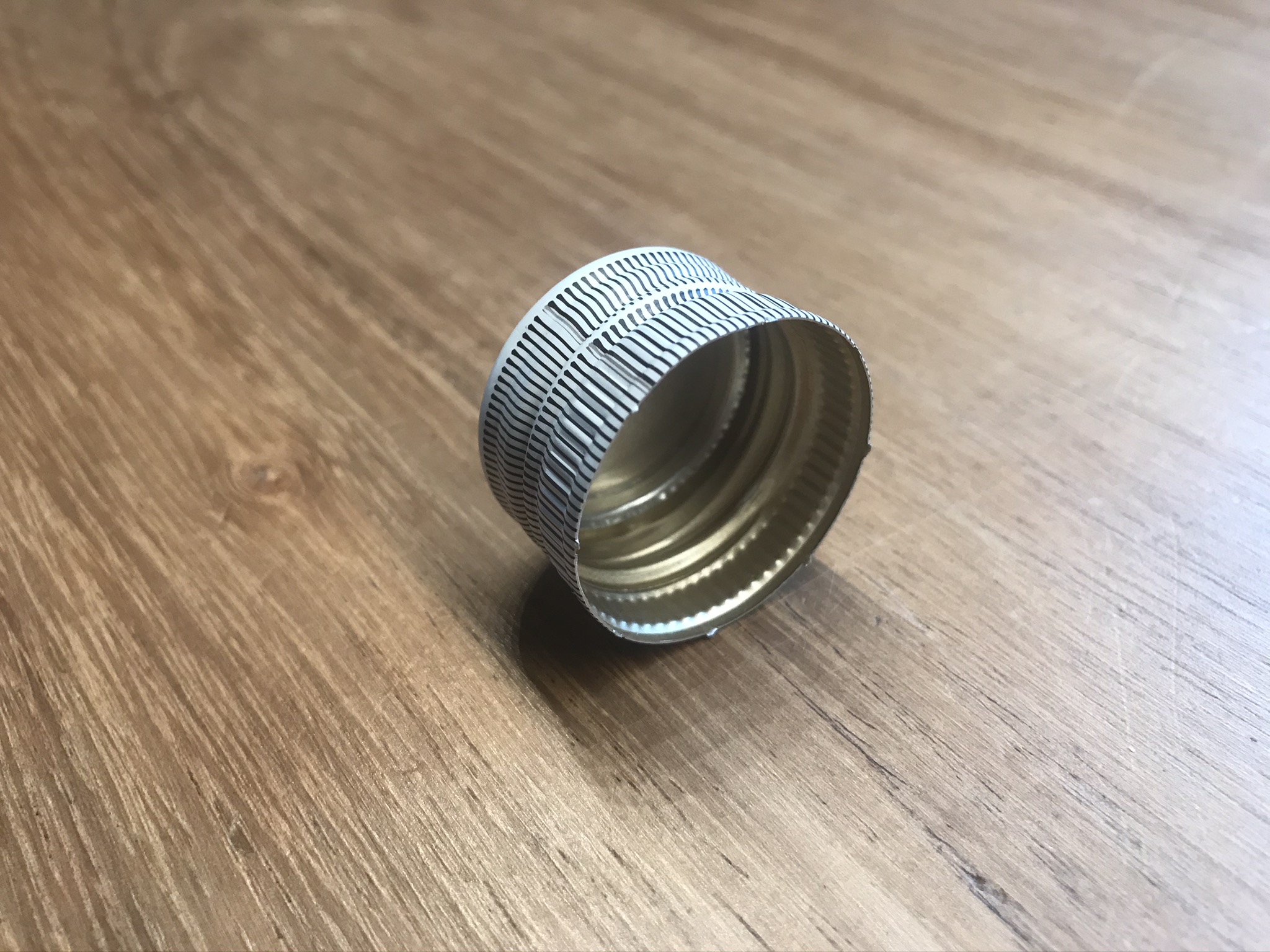
Image 1: Longcap
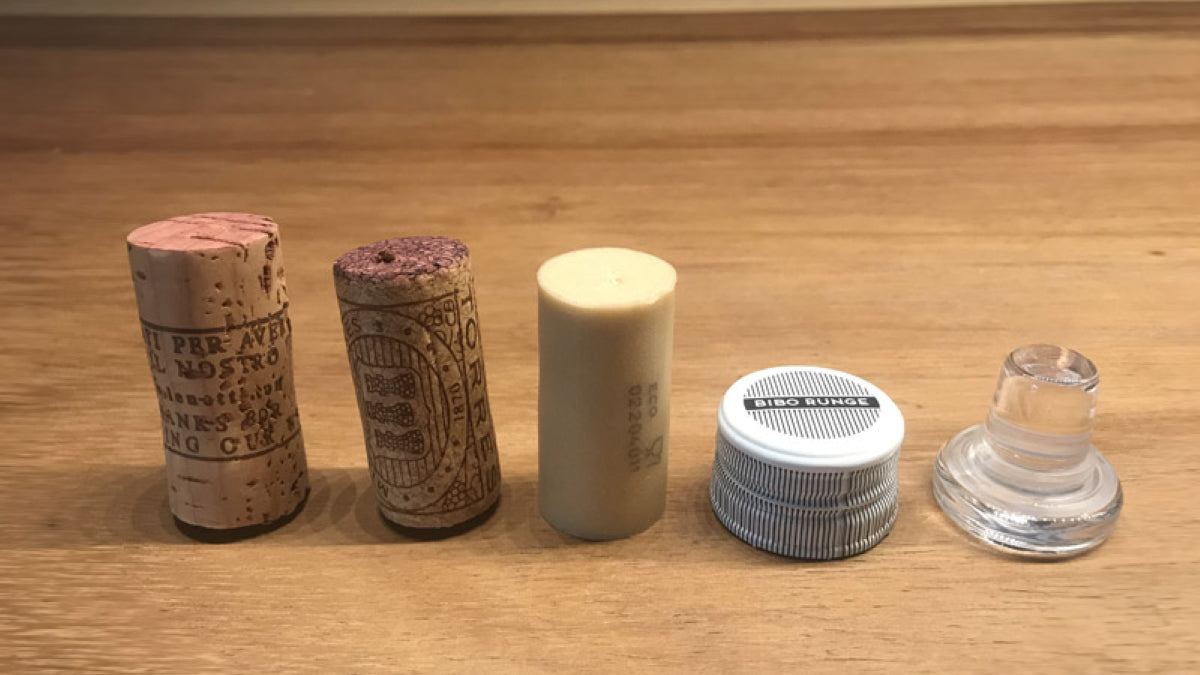
In Germany, the so-called long cap, or screw cap, has become the standard solution. Widely used in Switzerland since the 1970s, it has pushed all other closure types into the background in Germany over the last 10 years, primarily replacing plastic closures, which were very common in Germany and worldwide from 2004 to around 2010 and are still common in other countries.
Exact figures are unavailable, but estimates range from 60 to 80% market share of screw caps in Germany. The advantages of the long cap are obvious for wine bottlers: it is inexpensive, neutral in terms of the wine's flavor, and integrates well into the bottle design. When properly fitted, it is very airtight, which is particularly beneficial for fresh German white wines. The disadvantages lie in the complex manufacturing process, where many errors can occur. This can lead to some long caps being impossible to open even with pliers, wines oxidizing (and thus aging) quickly (if not airtight), or developing reductive notes, the notorious "Böckser" (if too airtight).
For the consumer, the screw cap is practical as it can be opened without tools, but – as a recent consumer survey conducted by Geisenheim University has shown – it does not contribute to the image of the wine; it does not inspire enthusiasm in anyone.
A little thought experiment: You're probably familiar with the large glass containers in restaurants or at the homes of passionate wine lovers, where the corks of bottles opened over the years are kept, like in a treasure chest. Such glasses also exist for the Vinolok glass stoppers, which we'll discuss later. But can you imagine anyone storing a glass with screw caps?!? Moreover, they have a reputation for not being the most environmentally friendly solution due to the aluminum used and the inserted sealing disc, which consists of several laminated layers.
plastic closure
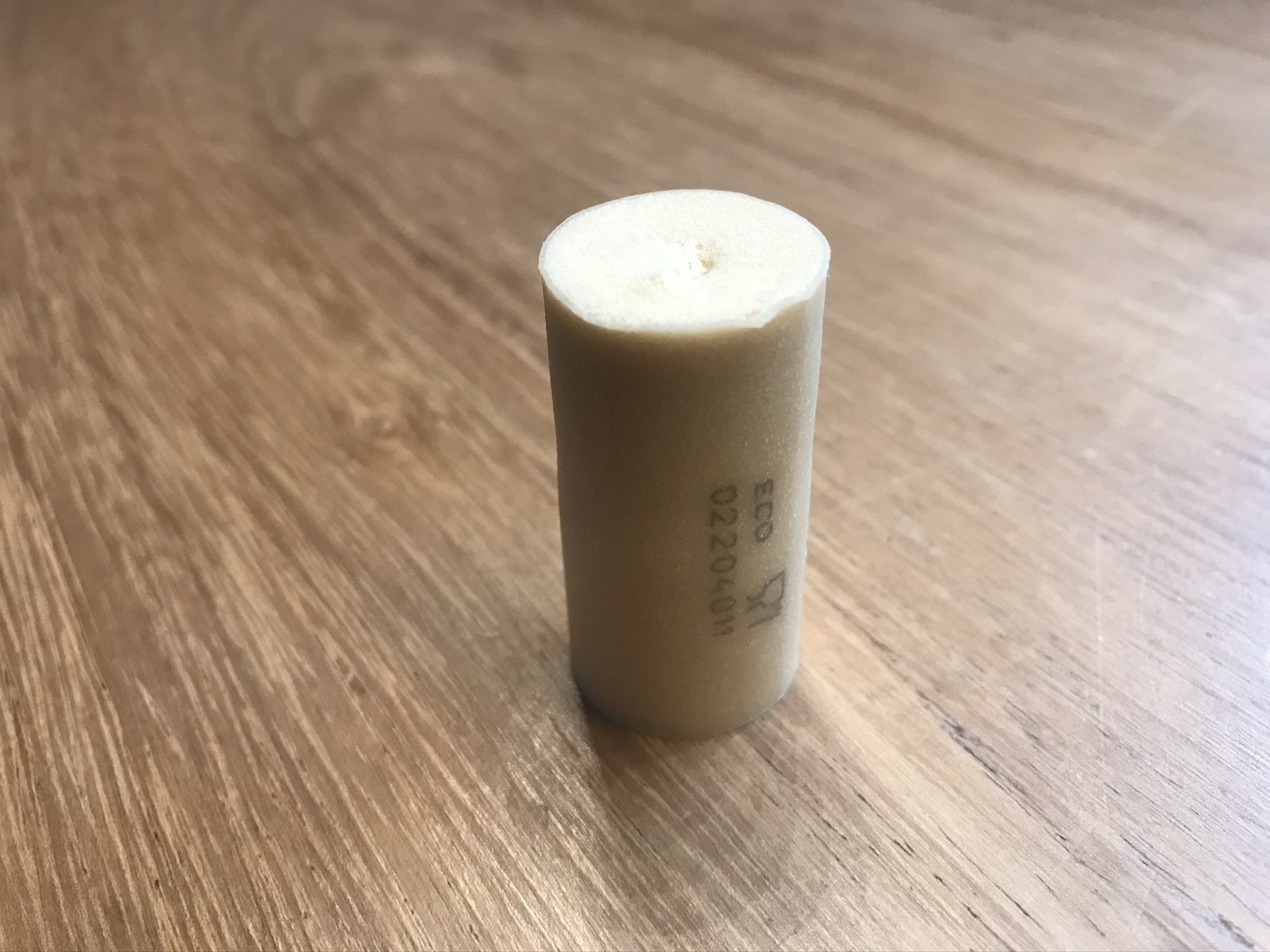 Image 2: Plastic closure
Another industrially manufactured closure is the plastic stopper. Early attempts with injection-molded products were made, but in the early 2000s, extrusion technology prevailed, quickly displacing injection-molded closures, inferior cork versions, and agglomerated corks from the market. This rapid growth, however, brought problems; these closures still have a reputation for being largely neutral to wine, but for leading to rapid oxidation due to their high gas permeability. Today, there are products on the market made from sustainable raw materials that are almost as tight as a screw cap and deceptively realistic imitations of natural cork. However, the heyday of plastic closures seems to be over – not least due to the debate surrounding plastic pollution in the oceans.
As the author of these lines, I don't want to hide the fact that he is still active in the industry and has now found "his" product: the Vinolok glass stopper, of which, unlike natural cork, screw caps, or plastic stoppers, there is only one manufacturer. Vinolok came onto the market in 2004 and quickly conquered the consumer press, especially in Germany, since it was developed there. Even today, it remains popular with end consumers because, unlike all other solutions, it is reusable at home, exudes high quality, and, thanks to the glass material, enjoys almost natural consumer acceptance.
Glass stopper
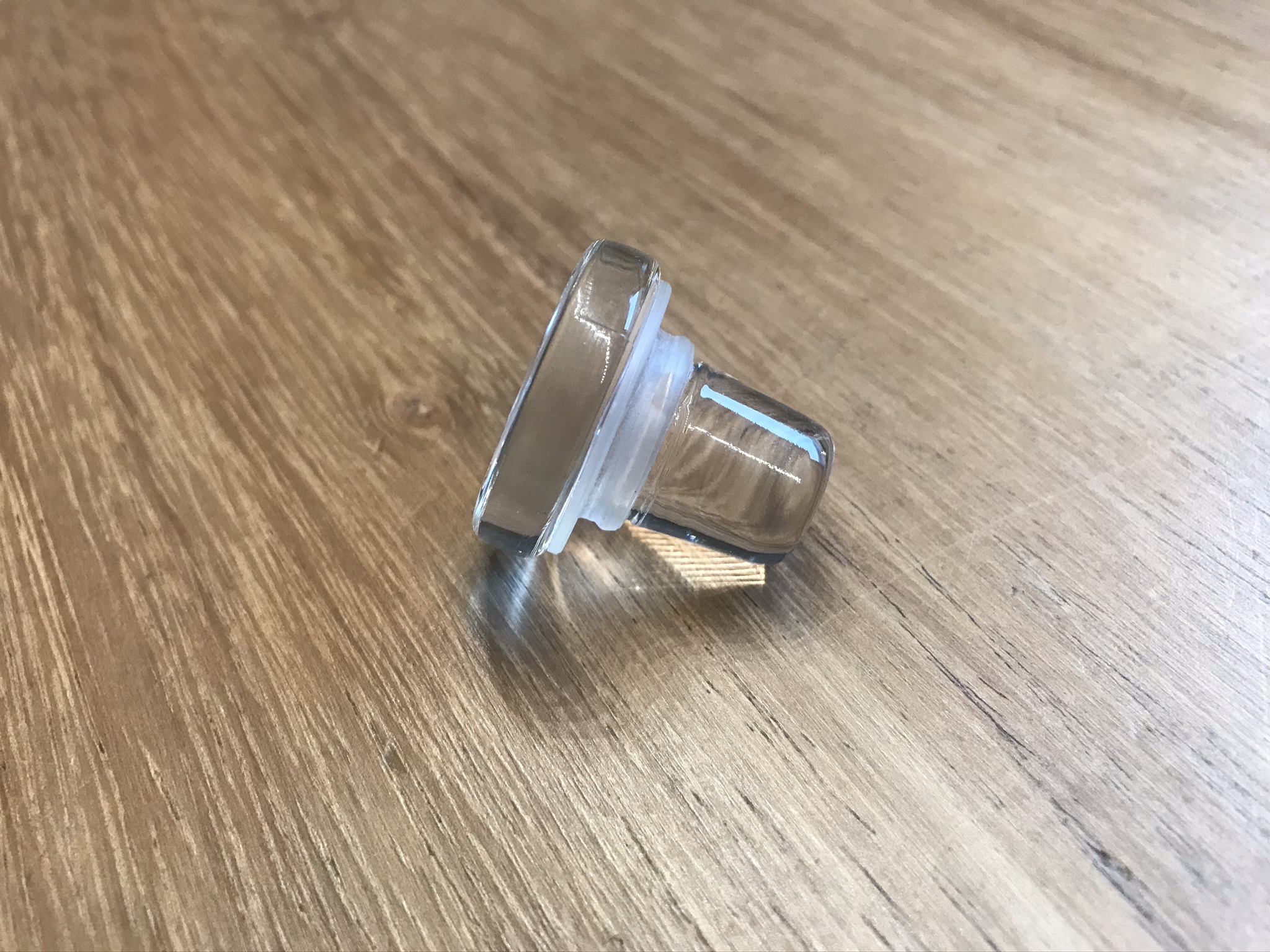 Image 3: Vinolk closure on glass
The aforementioned study from Geisenheim showed that Vinolok is far more popular with wine consumers than any other solution. While it does have a small plastic seal, this isn't glued to the glass body but simply attached. Therefore, it's not a bandage; the seal simply falls off when the glass is shredded and is recycled along with other sorted plastics. The glass body becomes glass again... again and again, because glass can be recycled indefinitely without any loss of quality. Thus, a Vinolok can become another Vinolok – a unique feature. This isn't possible with screw caps due to the aluminum alloy required for deep drawing, as the aluminum isn't collected separately. Natural cork can also be recycled, but not made into a new wine stopper. But back to Vinolok: it usually ends up in the aforementioned collection jar or in a kitchen drawer and is reused. It doesn't get more sustainable than that.
Vinolok also excels in wine preservation; bottlings from the early years (2003/2004) still exist, which – having aged gracefully – present themselves cleanly and clearly, since nothing can transfer from the glass to the wine and the contact area with the seal is much smaller than with a screw cap or plastic closure. And last but not least, like the screw cap, it can be opened without tools, and the bottle can be resealed leak-proof.
Natural cork
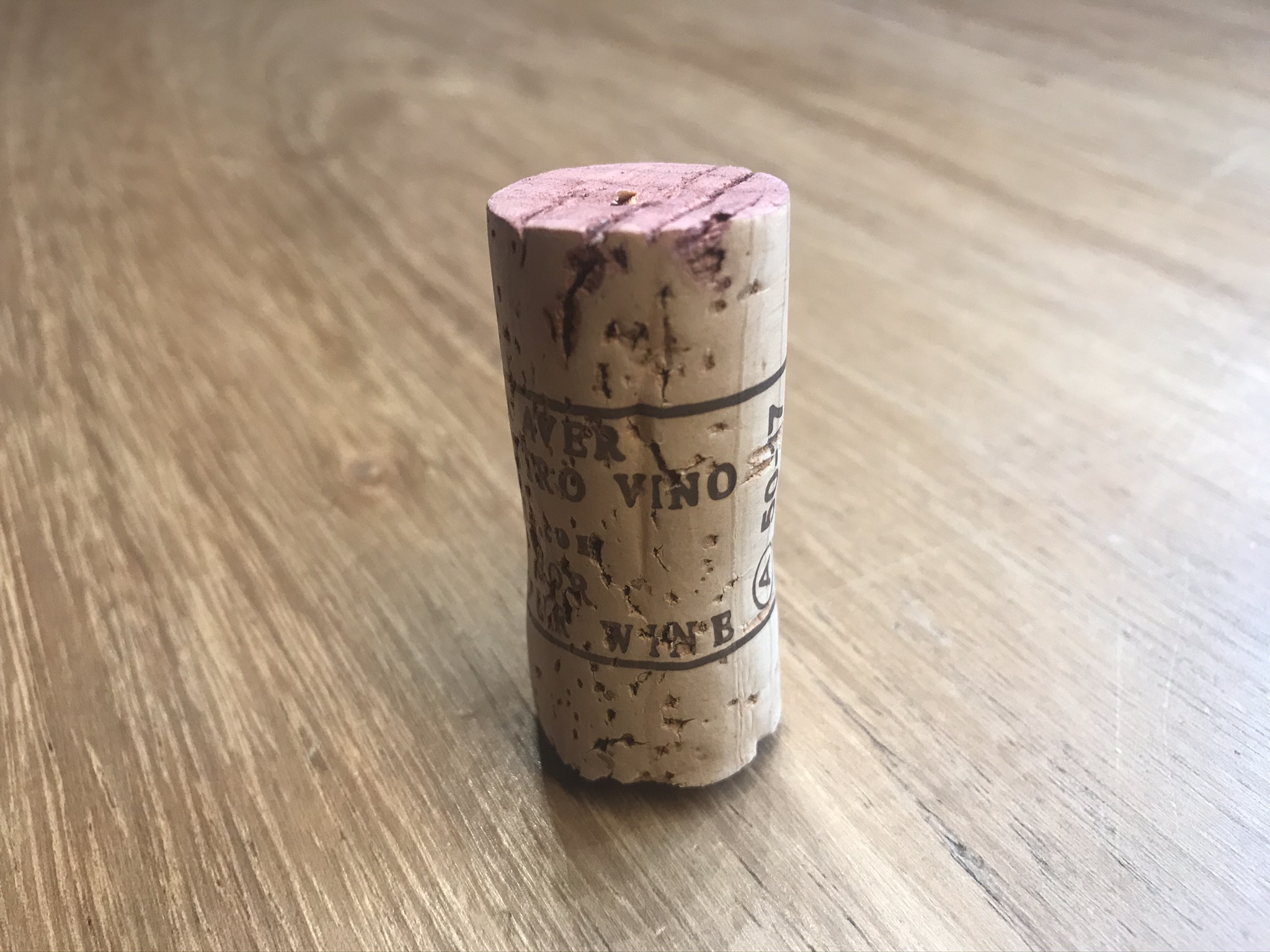
Image 4: Closure made of natural cork
So why hasn't it become universally accepted? Well, glass closures require a special bottling technique and special bottles, which weren't consistently available in the past. Now, nearly 400 bottle models are being tested for Vinolok, and this issue has been resolved. Sales in Germany are rising again, not least because high-quality natural corks are significantly more expensive, and glass closures can represent an economically viable alternative in the medium term.
Last, but not least, a few words about natural cork, or rather its derivatives, pressed corks or agglomerated corks.
Natural cork still holds a high status among wine connoisseurs; for centuries, it was the only way to seal a bottle leak-proof. This is made possible by the unique properties of cork oak bark, which can be compressed to seal the bottle without being damaged. The learned ritual of pulling the cork out of the bottle with a pop, smelling it, and inhaling the wonderful vanilla and toasty aromas of a good natural cork combined with the bouquet of the wine—that's something special. A good cork is certainly worth the investment; after all, we can still enjoy wines today that were sealed with natural cork decades ago.
The disadvantages, however, lie in the inconsistency of the material, which, after all, grows on a tree and is not industrially produced. Good producers – not least due to the pressure from alternative wine closures – have made quantum leaps in quality assurance and production standardization over the last two decades, but in my opinion, 100% guarantees cannot be given. While the typical cork taint is increasingly under control, and some producers even offer individually tested corks, these are only part of the problems that natural cork can cause for a good wine. Furthermore, the price of cork has risen steadily in recent years and can easily exceed one euro per piece. That's simply not acceptable for a wine that is subsequently intended to be sold for 5 or 6 euros.
Pressed corks
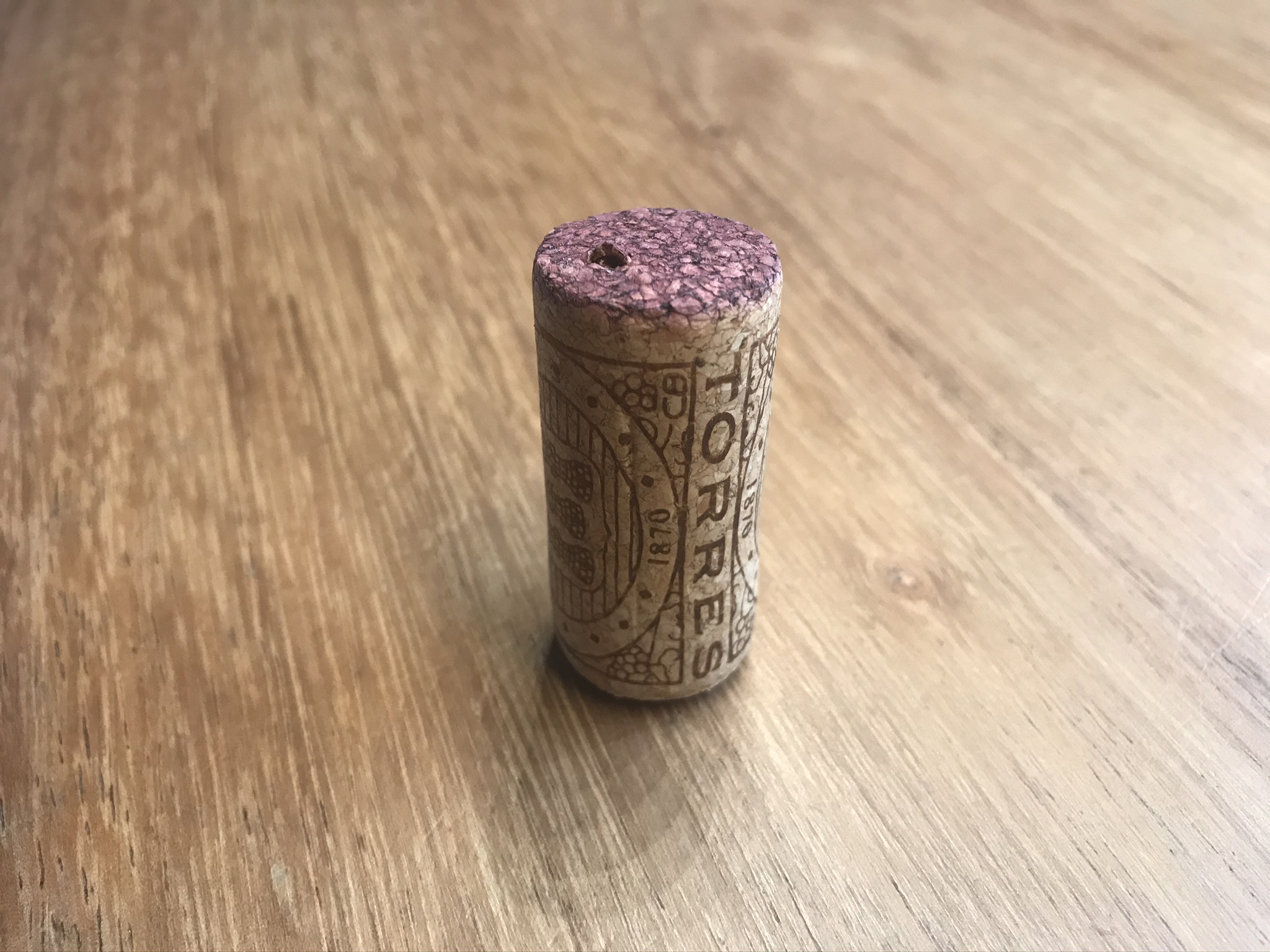 Image 5: Pressed cork closure
Much has changed in recent years with cork derivatives, such as pressed or agglomerated corks. These were developed to meet the ever-increasing demand for wine closures and to utilize the waste generated during the production of natural corks. These products consist of varying amounts of ground or shredded cork residue, fillers, and at least one binding agent. Modern products no longer require the polyurethane adhesive that was previously used in large quantities. Nevertheless, there is ongoing debate about the ingredients, and winemakers should rely on reputable suppliers. They are generally less expensive than genuine natural cork and, due to the material's compaction, are quite gas-tight.
Conclusion on the wine stopper
The debate about wine closures will continue, that's for sure. Whether screw cap, natural cork, or Vinolok, every alternative has its merits and will hold its own. Ultimately, it's about preserving and presenting the wine, created by the winemaker with love, dedication, and a tremendous amount of work, in the best possible way.
Cheers!
Author Michael Giesse
Michael Giesse is the Sales Director for Germany at the company Vinolok as from the Czech Republic.
- Michael Giesse 's LinkedIn profile
- Company website: https://vinolok.com/
Top wines with the elegant Vinolok closure

Written by Wolfgang Angeli


Leave a comment
This site is protected by hCaptcha and the hCaptcha Privacy Policy and Terms of Service apply.