
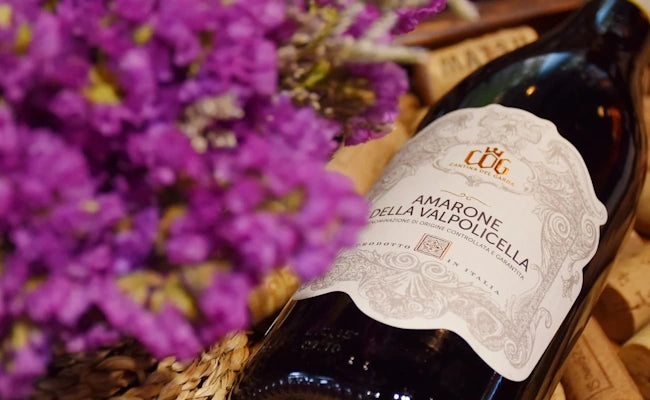

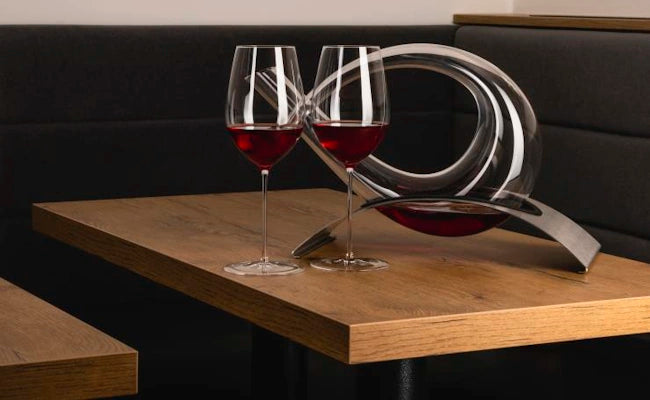

Amarone. Amore!
95% of my female friends call Amarone "their favorite wine." That's interesting. But not very surprising. This bittersweet kiss from Veneto is indeed very drinkable....

Grapes shortly after harvesting in the typical wooden crates
The grapes used to make Amarone Corte Manara are hand-harvested and then dried for at least 100 days under constant supervision. If noble rot (Botrytis cinerea) develops during this process, it is preferably used to make a sweet Recioto. However, Botrytis is undesirable for Amarone because the fungus reduces acidity and shelf life. During the drying process, the sugar in the berries concentrates, resulting in a robust 16% alcohol content in this wine.
Even the constant turning of the Amarone grapes during drying is a major undertaking. The berries lose almost half their weight in the process, leaving behind practically raisins. The yield is dramatically reduced. After fermentation and pressing, the Amarone must then age in barrels for at least three years before it can be bottled. It's no wonder, then, that the prices reflect the effort involved: you should expect to pay at least 20 to 30 euros for a good Amarone.

The Amarone from the Manara winery is available for around 25 euros – but tastes much more expensive; I was amazed! In a blind tasting, I would have valued it at around 50 euros without hesitation.
Aside from being expensive, it tastes powerful, fruity, and spicy. Aromas of vanilla, dark cherries, and bitter almonds entice the nose to take large sips. On the palate, it is equally voluminous, full, and rounded in flavor. A magnificent structure, velvety and smooth, almost creamy. I love its diverse aromas, ranging from herbs and black berries to dried plums. A slightly tart note (amaro means bitter) ensures that it doesn't become cloying. The sweet, fruity notes are balanced with the strong tannins, so this Amarone Corte Manara can be both sweet and bitter at the same time.
About the author Shirley Amberg
Shirley was born in Zurich and is a blend of Swiss, South African, Austrian, and English heritage. The Swiss influence is responsible for structure and foundation, while the South African adds harmony and passion. The Austrian brings charm and cheerfulness, and the English ensures she keeps her horizons open and her curiosity thirsty. Before turning her passion into a career, she worked in investment banking. On her website, Shirleyamberg.com , she writes about her tastings and publications on wine.
Instagram: @shirley_amberg
LinkedIn: shirley-ann-amberg-26502396

Written by Wolfgang Angeli


Leave a comment
This site is protected by hCaptcha and the hCaptcha Privacy Policy and Terms of Service apply.