



10 facts about pasta
Pasta is one of the world's most popular foods, steeped in tradition and cultural significance. While many of us eat pasta regularly and consider it an everyday staple, there are many interesting facts and stories that highlight its importance in world history and culture. In this blog post, we'll explore 10 amazing facts about pasta that you might not know. From the origins of pasta to its various shapes and preparation methods, let's delve into the fascinating world of pasta.
What type of pasta do Italians like to eat most?
Italians eat many different types of pasta and often have their own regional preferences. However, there are some pasta varieties that are very popular throughout Italy:
-
Spaghetti : Spaghetti is probably one of the best-known pasta varieties in Italy and is eaten in many regions of the country. The long, thin noodles are often served with tomato sauce, oil and garlic, or with seafood.
-
Penne : Penne are short, cylindrical pasta with diagonally cut ends. They are often served in a tomato or cream sauce, but also in combination with pesto or vegetables.
-
Tagliatelle : Tagliatelle are flat, wide pasta that are often served with a rich meat sauce (Ragù alla bolognese), but also with other sauces, such as mushrooms and cream.
-
Rigatoni : Rigatoni are short, tubular pasta with straight edges. They are often served in a tomato sauce or with meatballs.
-
Farfalle : Farfalle, also called butterfly pasta, are small, wing-like pasta. They are often served in light, creamy sauces or with vegetables.
These pasta varieties are just a few examples of the most popular pasta dishes in Italy, but there are many other types of pasta that vary depending on the region and seasonal ingredients.

Image: Spaghetti Bolognese
What are the most popular types of pasta?
There are a large number of different pasta varieties that are popular in Italy and around the world. Some of the best-known and most popular pasta varieties are:
-
Spaghetti : long, thin noodles, often served with tomato sauce, oil and garlic, or with seafood.
-
Penne : short, cylindrical pasta with diagonally cut ends, often served in a tomato or cream sauce.
-
Tagliatelle : flat, wide pasta, often served with a rich meat sauce (Ragù alla bolognese).
-
Fusilli : short, spiral-shaped pasta often served in salads or with vegetables.
-
Farfalle : small, wing-like pasta, often served in light, creamy sauces or with vegetables.
-
Ravioli : filled pasta pockets, often filled with cheese or meat and served with tomato sauce or butter.
-
Lasagna : flat, wide sheets of pasta baked in layers with a meat sauce and cheese.
-
Rigatoni : short, tubular pasta with straight edges, often served in a tomato sauce or with meatballs.
-
Linguine : similar to spaghetti, but flatter and wider.
-
Cannelloni : large, tubular pasta filled with a meat or cheese filling and served in a tomato or béchamel sauce.
-
Orecchiette : small, curved pasta, often served with broccoli and salsiccia or with a tomato and ricotta sauce.
-
Pappardelle : wide, flat pasta often served with wild boar ragù or mushroom sauce.
-
Gnocchi : small, gnocchi-like pasta, often served with a tomato or pesto sauce or with Gorgonzola cheese.
-
Fettuccine : wide, flat pasta, often served with a creamy sauce or with mushrooms and cream.
-
Conchiglie : small, shell-shaped pasta, often served in salads or with tomato and ricotta sauce.
These pasta varieties are just a few examples of the most popular and well-known types of pasta. However, there are many more pasta varieties, which vary depending on the region and culinary traditions.
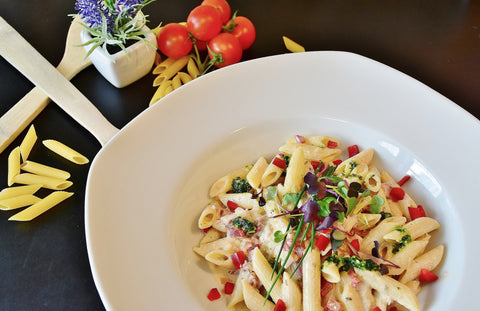
Image: Penne pasta
What is the healthiest pasta?
Pasta is typically made from durum wheat semolina and water, giving it a relatively low glycemic index compared to other carbohydrate sources, thus causing blood sugar levels to rise more slowly. In terms of health, the type of sauce used in its preparation can make all the difference.
Whole-wheat pasta is a healthier choice than white pasta because it's made from the whole grain and therefore contains more fiber, vitamins, and minerals. Fiber can help stabilize blood sugar and promote healthy digestion. It can also help lower cholesterol and reduce the risk of cardiovascular disease, diabetes, and colon cancer.
When it comes to sauces, tomato- or vegetable-based sauces are generally healthier than creamy sauces, as they contain less fat and fewer calories. Fish and seafood are also a healthy addition to pasta, as they are rich in omega-3 fatty acids, which are good for the heart and brain.
However, it's important to note that pasta should be consumed in moderation and as part of a balanced diet. A large portion of pasta with a heavy, high-fat sauce can still be unhealthy, even if it's made from whole-wheat pasta.
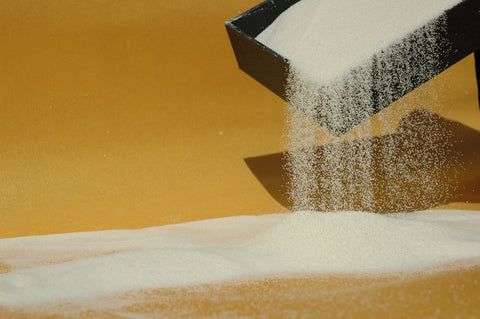
Image: Pasta made from durum wheat semolina
How can you recognize good pasta?
Good pasta can be recognized by several characteristics:
-
Appearance : The pasta should be of a uniform color, without spots or discoloration. The surface should be smooth and glossy.
-
Consistency : The pasta should be al dente, meaning it should still have a slight bite and not be too soft or too hard.
-
Aroma : Good pasta has a light, pleasant aroma of wheat.
-
Cooking time : The cooking time should be indicated on the packaging, and a short cooking time is an indication that the pasta was made from high-quality durum wheat semolina.
-
Origin : Pasta from well-known regions like Gragnano in Italy or from small family businesses often has a higher quality than mass-produced pasta from factories.
-
Ingredients : Good pasta consists of high-quality durum wheat semolina and water. Additives such as eggs or colorings are optional.
-
Taste : Good pasta has a mild, nutty wheat flavor and should absorb the sauce well without falling apart.
-
Texture : Good pasta should have a pleasant texture that is pleasing to the palate. The pasta should be easy to chew without being tough or sticky.
-
Cooking characteristics : Good pasta retains its shape and consistency during cooking. The cooking time should be indicated on the packaging, and the pasta should not fall apart too quickly or take too long to become al dente.
-
Color : The pasta should be a uniform color, without discoloration or spots. For pasta made with natural ingredients like spinach or tomatoes, the color should be intense.
By taking these characteristics into account, you can recognize good quality pasta and ensure that you enjoy pasta of high quality and good taste.
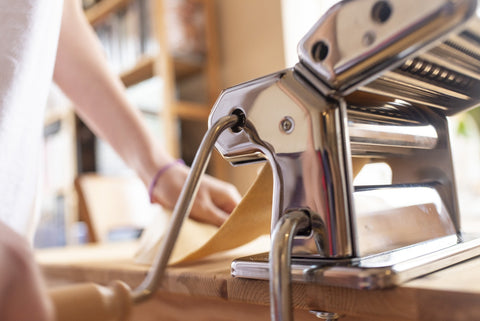
Image: Pasta machine for pasta production
What is the best cheese for pasta?
There's no single answer to which cheese is best for pasta dishes, as it depends on the type of pasta and personal preference. However, here are some popular cheeses often used in pasta dishes:
-
Parmigiano Reggiano or Pecorino Romano : These spicy hard cheeses are often grated or shaved and sprinkled over pasta dishes, such as spaghetti carbonara or pasta with tomato sauce.
-
Mozzarella : This soft cheese is often used in pasta dishes such as lasagna or penne alla vodka, as it melts well and gives a creamy texture.
-
Gorgonzola : This spicy blue cheese can be used in pasta dishes such as Penne al Gorgonzola or Linguine with Gorgonzola and walnuts.
-
Ricotta : This fresh, mild cheese is often used in filled pasta dishes such as cannelloni or ravioli.
It's important to note that each cheese has a different texture and flavor, which can affect the pasta dish in different ways. Ultimately, the choice of cheese for pasta dishes depends on individual preferences and the desired taste.
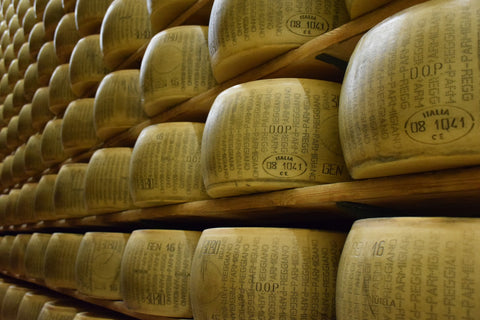
Image: Parmigiano Reggiano cheese from Italy
Where does the best pasta from Italy come from?
Italy is known for its excellent pasta, and there are many regions that are famous for their specific pasta varieties and production methods. Here are a few examples:
-
Gragnano, in the Campania region, is known for its traditional Pasta di Gragnano, made from durum wheat semolina and spring water. This pasta is often pressed through bronze dies to achieve a rough texture that better absorbs sauces.
-
Puglia is famous for its orecchiette, small ear-shaped pasta, which is often served with turnip greens and garlic or tomatoes and ricotta.
-
Sardinia is known for its Malloreddus, small, spindle-shaped pasta often eaten with tomato sauce and sausage.
-
Emilia-Romagna is the center of pasta production in Italy and is known for pasta varieties such as tortellini, lasagne, tagliatelle and ravioli.
It's difficult to say where the "best" pasta from Italy comes from, as there are many excellent producers in different regions. The choice often depends on personal preferences and experience. However, it's always advisable to look for high-quality ingredients, traditional production methods, and careful processing to ensure you get delicious, top-quality pasta.
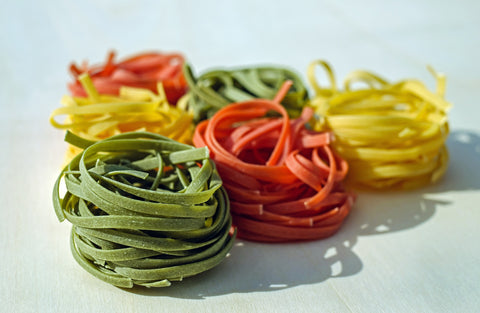
Image: Tricolore Pasta Tagliatelle from Italy
Where is pasta eaten most often?
Italy is the world's most pasta-consuming country. According to 2020 data from the International Pasta Organisation (IPO), Italians ate an average of about 23.5 kilograms of pasta per person per year. Other countries known for their high pasta consumption include Venezuela, Switzerland, Tunisia, Greece, and Chile. Pasta is also among the most popular dishes in many other countries, such as the USA, Canada, Brazil, France, and Spain.
Pasta is not as popular in Germany as it is in other countries, especially Italy. There are several reasons for this:
-
Traditional German dishes such as potatoes, meat and cabbage dishes have a long history and are deeply rooted in German culture, while pasta dishes are relatively new in Germany.
-
In Germany, there are also a variety of other popular dishes from international cuisine, such as doner kebab, pizza or sushi, which may cause pasta dishes to fade into the background.
-
It is also possible that preferences and eating habits in Germany are simply different than in Italy or other countries, and that pasta dishes are not as popular as in other parts of the world.
Regardless of the reasons, there are many delicious pasta dishes in Germany that are appreciated by the people, and pasta is also regularly served as part of international dishes or as a side dish.
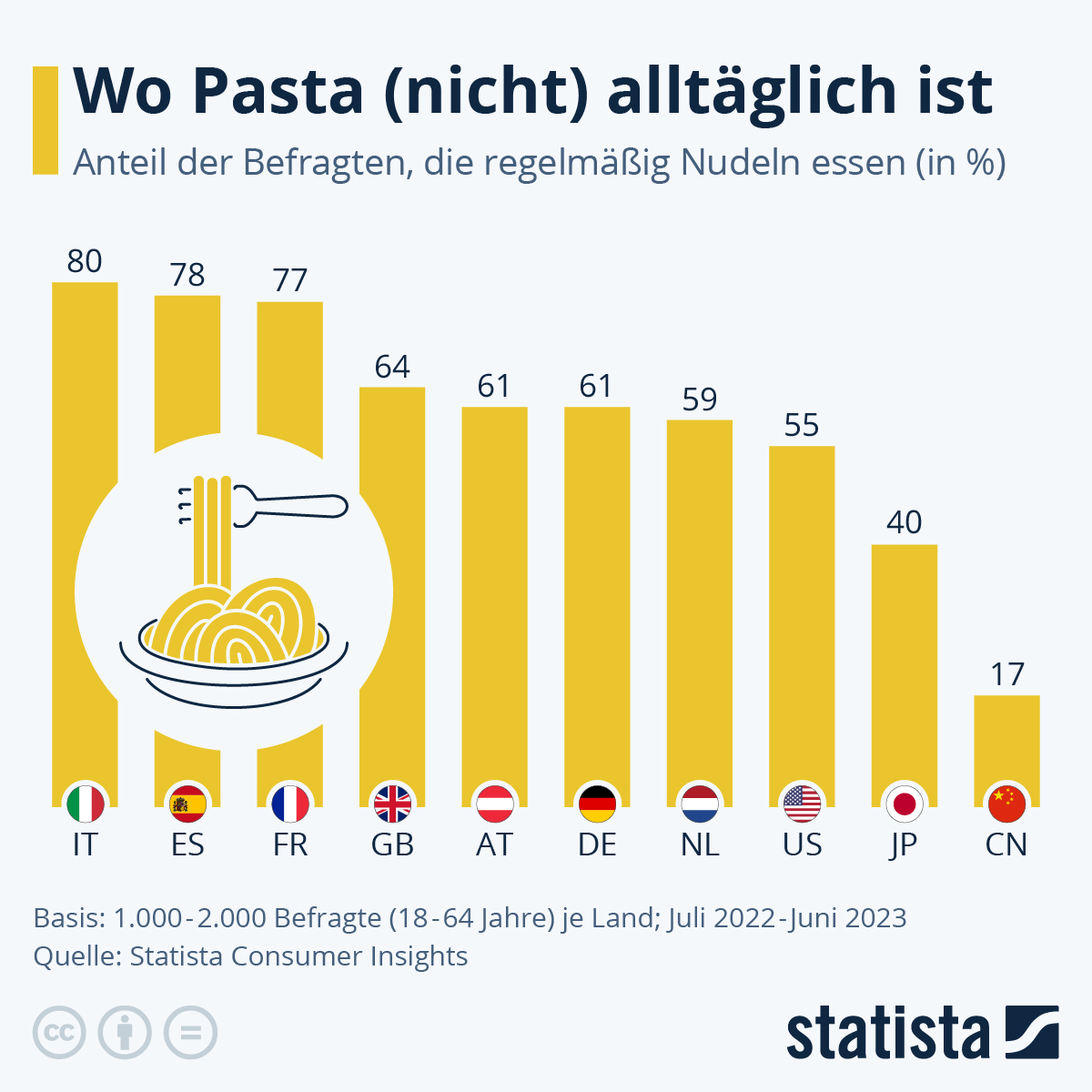 Image: More infographics can be found at Statista.
Which is healthier: rice, potatoes, or pasta?
All three food groups—rice, potatoes, and pasta—can be part of a healthy and balanced diet, as they provide important nutrients such as carbohydrates, fiber, vitamins, and minerals. The choice between them ultimately depends on individual needs and preferences.
- Rice is a good source of complex carbohydrates and fiber, especially brown rice, which also contains more vitamins and minerals than white rice. However, white rice can cause a rapid rise in blood sugar levels in some people, particularly those with diabetes.
- Potatoes are rich in carbohydrates, fiber, vitamins, and minerals, and can also be a source of protein. Sweet potatoes are particularly nutrient-dense and also contain antioxidants.
- Pasta made from durum wheat semolina is also a good source of carbohydrates and fiber. Whole wheat pasta also contains more nutrients than refined pasta because it contains the entire grain.
It's important to keep an eye on portion sizes and maintain a balanced diet to ensure you're getting enough nutrients from different food groups. Ultimately, the choice between rice, potatoes, and pasta depends on personal preference, nutritional needs, and overall energy requirements.

Image: Rice, pasta or potatoes
Is a smooth or rough surface better for pasta?
There is no definitive answer as to whether a rough or smooth surface is better for pasta, as it ultimately comes down to personal taste and preference.
However, there are some advantages and disadvantages to both types of surfaces:
-
Smooth surfaces : A smooth surface allows the sauce to adhere better to the pasta because there is less resistance. Smooth pasta is therefore well suited for creamy sauces like carbonara or Alfredo.
-
Rough surfaces : A rough surface allows the sauce to adhere better and thus absorb more flavor. It is therefore well suited for sauces that have a lot of texture and flavor, such as tomato sauce.
Some pasta shapes naturally have a rough surface, such as penne, while others have smoother surfaces, like spaghetti. However, some pasta shapes, such as rigatoni, can also be found in both smooth and rough versions.
Therefore, whether a rough or smooth surface is preferred depends on the sauce and personal preference.
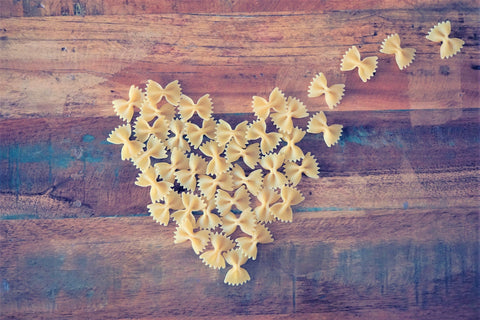
Image: Farfalle pasta
Why are noodles called "pasta" in Italy?
The word "pasta" comes from Italian and means "dough" or "pasta products". The term was first used in the Middle Ages, when pasta making gained popularity in Italy.
Pasta production has been documented in Italy since the 13th century and quickly became an important part of Italian cuisine. The earliest types of pasta were made from flour and water, but over time various ingredients, such as eggs and vegetables, were added to create a wide variety of pasta types and shapes.
The word "pasta" later became synonymous with these noodles and is now used worldwide to describe all types of pasta, regardless of their origin or ingredients. However, in Italy, there are many regional variations of pasta based on local traditions and ingredients, often with their own distinct names.
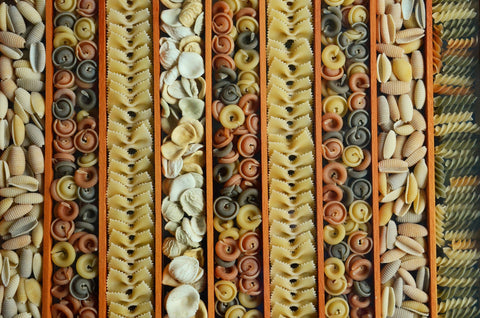
Image: Noodles vs. Pasta vs. Pasta

Written by Wolfgang Angeli


Leave a comment
This site is protected by hCaptcha and the hCaptcha Privacy Policy and Terms of Service apply.