


Red wine island in the middle of the white wine region
The Schöfmann winery is located in the Weinviertel, Austria's largest wine-growing region. Year after year, winemaker Anton Schöfmann realizes his passion for expressive wines and shares it with Anna and Laurenz, the younger generation of the family winery.
What is there to know about Austrian wine?
First, some general information. Compared to other countries worldwide, Austria is a relatively small wine-producing nation, accounting for just under 1 percent of global wine production with 2.75 million hectoliters. In this respect, major wine-producing nations like Italy, France, and Spain are somewhat ahead of us.
What makes Austria stand out as a wine-growing country with small-scale structures is its remarkable diversity. White and red grape varieties, different soil types, and the unique microclimates of each wine region give rise to a wide range of wine styles. Each of the 16 wine regions has its own distinct character, reflecting the unmistakable style of the region.

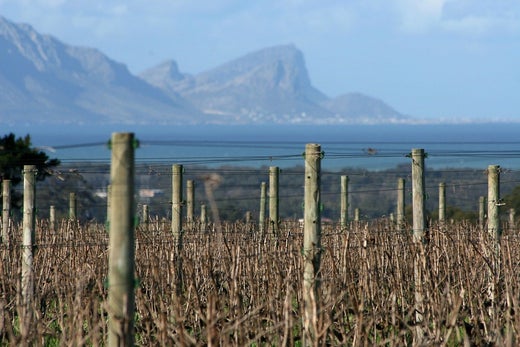
Image: Vineyards of the Anton Schöfmann winery in Haugsdorf in the Weinviertel region
Austria = Grüner Veltliner?
Austria is internationally recognized as a white wine country; after all, 67 percent of its vineyard area is planted with white wine grape varieties. Grüner Veltliner is considered its flagship variety and is not only the most widely cultivated but also the best-known grape variety in Austria.
Other varieties such as Welschriesling, Riesling and Pinot Blanc play an equally important role and provide a wide variety of white wine styles, from spicy and fruity to creamy and full-bodied.
Nevertheless, some wine-growing regions, including Burgenland, have specialized in the production of first-class red wines, as red grape varieties thrive there due to the Pannonian climate. Zweigelt is an Austrian grape variety, created at the Klosterneuburg viticultural school by crossing Blaufränkisch and Sankt Laurent. Today, Zweigelt is the most widely planted red wine grape variety, followed by Blaufränkisch.
Smaller "red wine islands" have also established themselves in other regions. For example, the Thermenregion, located south of Vienna, is known for excellent Pinot Noirs, and the Weinviertel also produces expressive red wines, representing a slight counter-trend in a predominantly white wine region.

The typical Grüner Veltliner from the Weinviertel region
Grüner Veltliner plays the leading role in the Weinviertel region. Almost half of the Weinviertel's vineyards are planted with Grüner Veltliner vines. The resulting white wine has a particularly characteristic aroma. "Fruit-forward, fresh with crisp acidity and peppery spice" is how a typical Grüner Veltliner from the Weinviertel can be described.
To define this fresh and fruity character as the authentic taste of the Weinviertel region, the Weinviertel was classified as Austria's first DAC region in 2002. The Weinviertel DAC stands for the typical, spicy Grüner Veltliner and has thus become known throughout Austria and internationally.
Red wine island in the Grüner Veltliner region
In the heart of the Weinviertel region, right on the northern border with the Czech Republic, lies a small "island" that practices winemaking somewhat differently. The crucial difference lies in the grape varieties and the climate. Although the Weinviertel is known for Grüner Veltliner, here, in the area around Haugsdorf, red wine predominates thanks to a long tradition.
The main reason for this is the special microclimate and the loamy-sandy soils. Low rainfall and the geological conditions are ideal for red wine production. The vineyards around Haugsdorf are therefore called the "red wine island of the Weinviertel." However, Grüner Veltliner is also of great importance in the white wine sector here.

The Hutberg as a trademark
The Schöfmann family winery is located there, and their passion for red wine and Grüner Veltliner fits perfectly into this region.
Driving up the cellar lane in Haugsdorf, you reach the Hutberg vineyard, considered one of the best red wine sites. The red wine cuvée named after this vineyard has been the Schöfmann family's signature wine since 1990 and celebrates its 30th anniversary this year.
Wine needs time
In the vineyard, all family members help to achieve the best possible result. Even though this requires many hours of work, at the end of the wine year, the quality is evident, making the careful tending of the vines worthwhile.
In the wine cellar, the harvested grapes are processed according to their origin and flavor profile. There is no perfect recipe for winemaking; instead, intuition and years of experience are crucial. For the Schöfmann family, it is important to give each wine the necessary time to ideally develop its character. Maceration, lees aging, barrel aging, and bottle maturation are all carefully employed to give the white and red wines their distinctive expression.
The range includes Grüner Veltliner in three different styles, followed by a wide selection of red wines – both single-varietal and blends. Local grape varieties such as Zweigelt, Blauer Portugieser, and Sankt Laurent reflect the region's profile. Varieties like Cabernet Sauvignon and Pinot Noir demonstrate that the Weinviertel region can also produce remarkable red wines in an international style.

About the author Anna Schöfmann
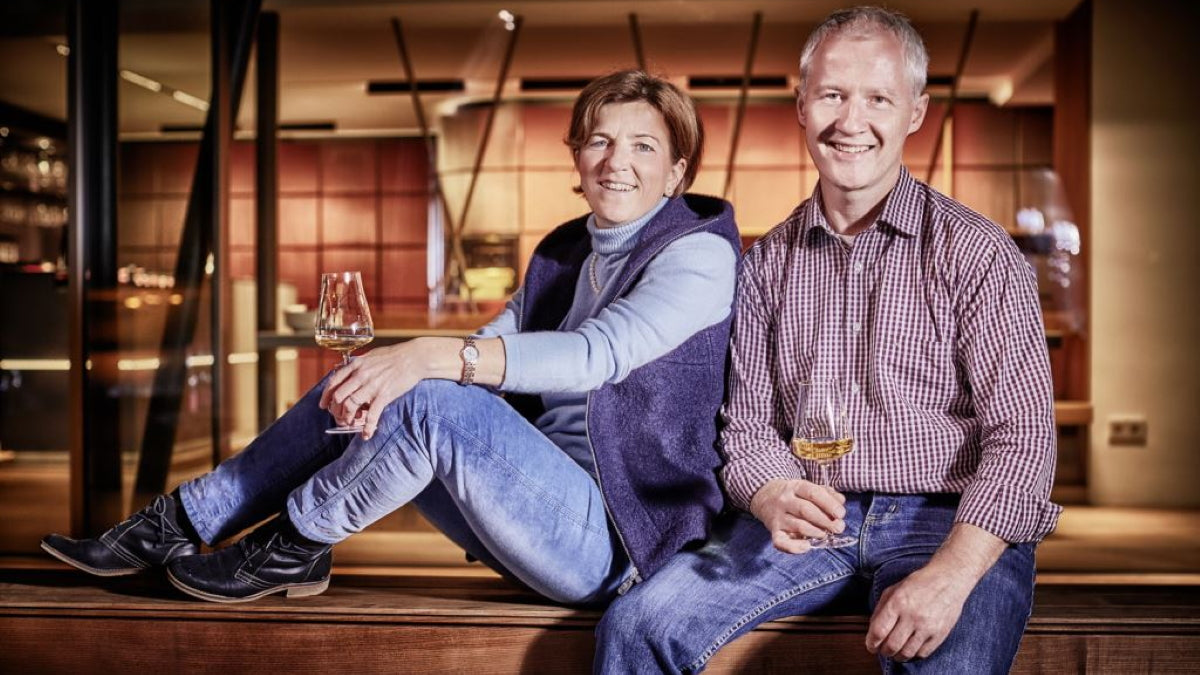
Anna Schöfmann and her brother Laurenz represent the next generation at the Schöfmann winery, located in northern Lower Austria. Here, three generations work together, united by a passion for expressive red and white wines. Winemaker Anton Schöfmann receives support from the younger generation in all aspects of wine production and at events. Their grandfather also makes a significant contribution, offering advice and practical assistance – in a family business, everyone complements each other.
Anna discovered her love of wine during her five-year tourism apprenticeship. She participated in national and international wine competitions, gaining firsthand experience of the diverse and exciting wine industry. In 2017, Anna decided to study International Wine Business to learn more about wine production and the wine market. With her growing interest in wine, Anna took on more and more responsibilities at her family's winery and, together with her brother Laurenz, is shaping the future of the Schöfmann winery.
"What I enjoy most about the winemaker's life is being out and about in the vineyards, in wine shops and at events. The love for the product is just as important as innovation and openness to new ideas."

Further information

Written by Wolfgang Angeli

Leave a comment
This site is protected by hCaptcha and the hCaptcha Privacy Policy and Terms of Service apply.